


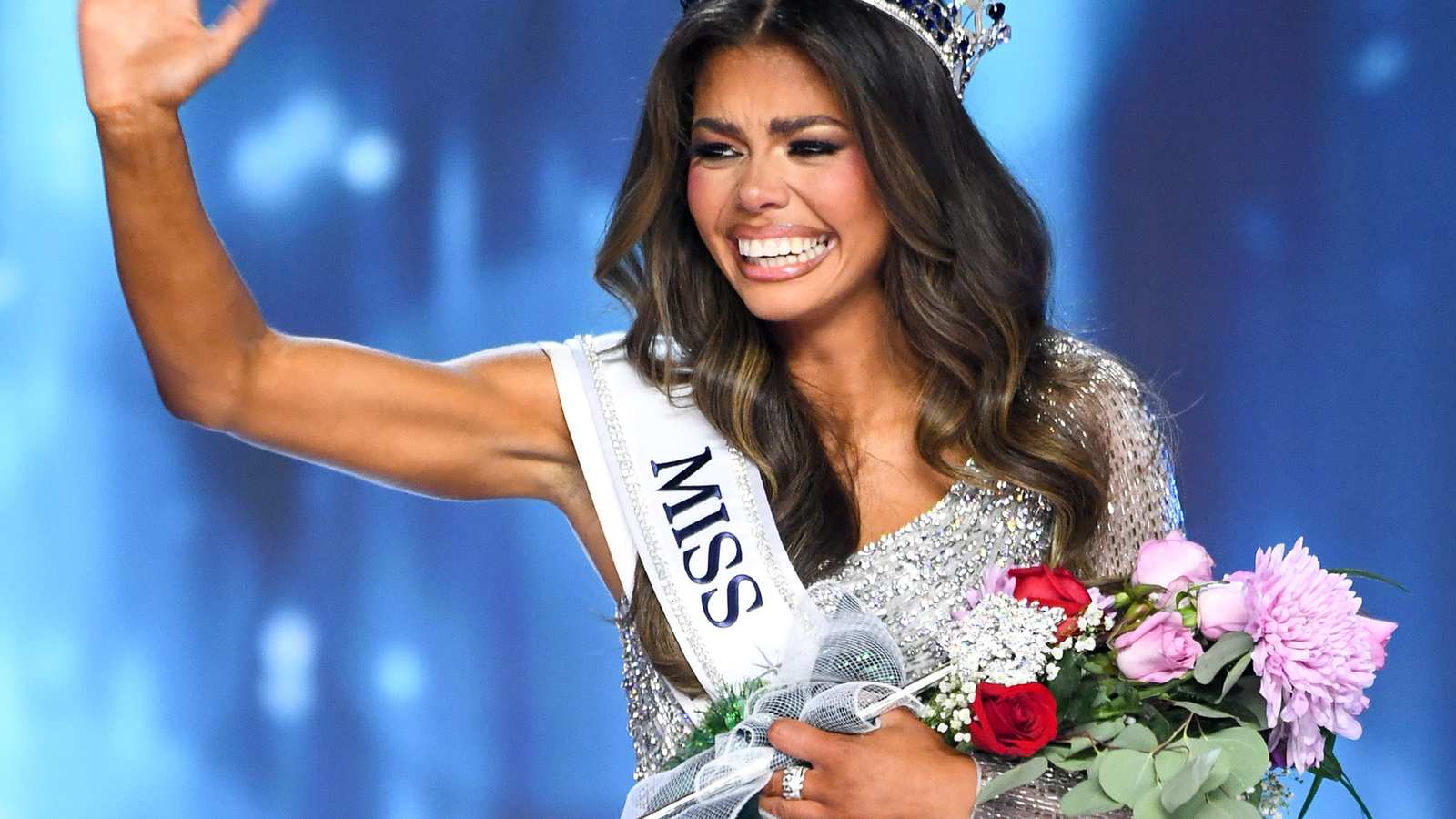
A legal battle has emerged within the American pageant system as Brittany Boltinhouse, the recently crowned 2026 Miss North Carolina USA, has filed a civil defamation lawsuit against the Miss USA Organization and its state directors. According to court documents filed on August 24 in the Duplin Superior Court in North Carolina, the 27-year-old entrepreneur alleges that the pageant’s leadership orchestrated a public relations campaign that destroyed her reputation under the pretext of addressing historical social media posts, while allegedly seeking to punish her for her conservative Christian beliefs.
The lawsuit names JKN Universe LLC (doing business as Miss USA and Miss Universe), Miss USA CEO Thom Brodeur, A Blaize Productions LLC (the state franchise holder), and state directors Ariana and Nic Blaize as defendants. The civil action does not challenge the organization’s legal authority to strip Boltinhouse of her crown, which occurred shortly after her victory on June 28 and weeks before the national Miss USA competition in Miami, Florida. Instead, the legal challenge focuses on the public characterization of her exit, which she claims constituted actionable defamation and a conspiracy to cause severe reputational and financial damage.
The Core Dispute: Historical Posts vs. Political Beliefs
The public controversy began when online researchers uncovered social media posts from Boltinhouse’s teenage years. According to the complaint, Boltinhouse used a racial slur five times in social media posts in 2017 when she was a teenager, and once more in a separate post in 2019. In her court filings, Boltinhouse states that she used the “slang term” without any intent to offend and argues that these past posts do not reflect her character or make her a “racist, homophobe, transphobe or bigot.” To counter the public characterization of racism, the complaint notes that Boltinhouse is of mixed race, identifying as the proud daughter of immigrant parents and the great-granddaughter of Antonio Sosa Figueroa, an Afro-Latino Honduran who self-identified as Black.
However, Boltinhouse alleges that the focus on her teenage posts was merely a convenient pretext. She asserts that the defendants’ decision to strip her of her title was actually motivated by hostility toward her conservative Christian faith and her political activities. The complaint details her public support for former President Donald Trump, her attendance at Trump’s speech in Washington, D.C., on January 6, 2021, her support for conservative commentator Charlie Kirk, and her social media posts objecting to President Joe Biden’s declaration of a National Transgender Day of Visibility. Boltinhouse claims that state director Nic Blaize explicitly told her that her title was being revoked due to “the totality of your posts,” which she argues included her protected political and religious speech.
The Pageant’s Stance and the Apology Controversy
The Miss USA Organization and its state affiliate have maintained that their actions were based strictly on maintaining the integrity of the title. In an August 5 statement released on Instagram, A Blaize Productions announced that Boltinhouse’s reign had concluded following a “thorough review of recently surfaced information” that did not align with the values of the organization. Miss USA CEO Thom Brodeur supported the decision, issuing a statement emphasizing that the national organization has zero tolerance for “racism, homophobia, transphobia nor language that strips any person of their dignity.” Following her removal, runner-up Myla Hadley was elevated to represent North Carolina at the national pageant.
A central point of contention in the lawsuit involves a public apology statement. Boltinhouse alleges that CEO Thom Brodeur falsely claimed to have read a statement written by her that demonstrated “ownership, accountability and apology.” According to the complaint, this statement was actually drafted entirely by A Blaize Productions without Boltinhouse’s input, consent, or signature. She argues that attributing this unapproved statement to her was part of a coordinated effort to manage the pageant’s commercial interests and franchise status at her expense, effectively validating the public narrative that she was unfit for the title.
Legal Stakes: Defamation and Commercial Damage
By focusing on defamation rather than the breach of the pageant contract itself, Boltinhouse’s legal team is targeting the public statements made by the organizers. Under North Carolina law, a defamation claim requires proving that the defendants made false, defamatory statements to third parties that caused actual injury. Because Boltinhouse is seeking punitive, special, and consequential damages, the court will have to evaluate whether the defendants acted with actual malice—meaning they knew the statements were false or acted with reckless disregard for the truth.
The financial stakes are significant. Beyond the immediate loss of the Miss North Carolina USA title, Boltinhouse claims the controversy has caused “excruciating reputational destruction,” resulting in severe emotional distress, loss of professional opportunities, and the loss of lucrative sponsorships and endorsements associated with the national Miss USA broadcast. As an entrepreneur who owns two flooring and turf companies, Boltinhouse argues that the public branding of her as a bigot has directly harmed her standing in the business community. The lawsuit seeks a jury trial to determine the full extent of monetary damages.