


Melbourne Park, a familiar battleground for tennis legends, recently played host to a revolutionary spectacle that redefined the very essence of competitive tennis: the One Point Slam. This audacious new tournament, held just ahead of the Australian Open, pitted 24 of the world’s top professional players against a diverse field of amateurs, state champions, and wildcards in a winner-takes-all, single-point format. The stakes were astronomical – a cool one million Australian dollars for the ultimate victor – and the outcomes were nothing short of sensational, proving that in a game of mere inches, reputations can crumble in an instant.
The format itself was disarmingly simple, yet brutally effective: each match consisted of a single, decisive point. A quick game of ‘rock, paper, scissors’ determined who served, and the player who won that solitary point advanced, while the loser’s journey ended abruptly. This radical approach stripped away the usual endurance, strategy, and mental fortitude that define Grand Slam tennis, replacing it with pure, unadulterated pressure and the unforgiving reality of a single moment.
Tennis Giants Stumble: Sinner, Alcaraz Among Shocked Elite
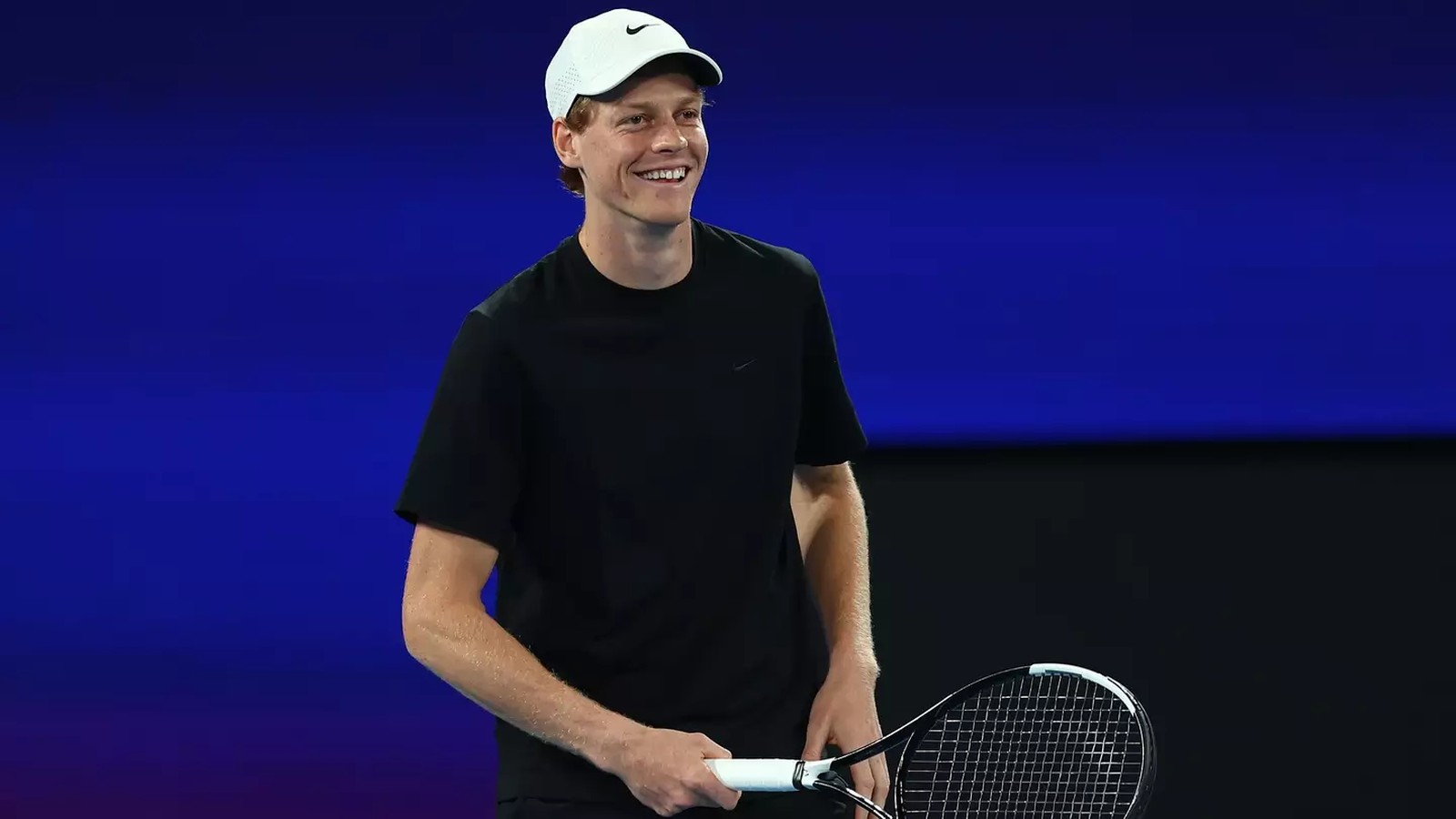
The tournament quickly became a graveyard for giants. World number seven Felix Auger-Aliassime was an early casualty, dispatched by amateur Alec Reverente. While Reverente’s run was cut short by WTA star McCartney Kessler, the message was clear: no professional was safe. The biggest shockwave, however, came when four-time Grand Slam winner and heavy favourite Jannik Sinner found himself on the wrong side of a single point against amateur Jordan Smith. The Italian’s undoing? A double fault, a cardinal sin in any match, but particularly devastating when it’s the only point that matters, as reported by SportBible.
The upsets continued to pile up. Former Olympic champion Alexander Zverev, a formidable presence on the men’s tour, was outmanoeuvred by Joanna Garland, ranked 117th in the WTA. After a tense rally, Zverev sent a forehand wide, handing Garland a surprising victory. His candid post-match admission, ‘She was just better than me!’, perfectly encapsulated the humbling nature of the event. Even the men’s world number one, Carlos Alcaraz, who had earlier generated buzz by meeting celebrity wildcard Jay Chou (as noted by TennisTonic), fell victim to the format, losing to Maria Sakkari in the quarter-final stage. The meeting with Chou highlighted the unique blend of sporting excellence and global entertainment this event sought to achieve, setting the stage for an unforgettable night at Rod Laver Arena.
WTA Stars Shine, Amateurs Rise to the Occasion
Beyond the professional male players’ struggles, the One Point Slam showcased the immense talent and competitive spirit of the women’s tour and the determined amateurs. Iga Swiatek, a powerhouse in women’s tennis, demonstrated her dominance by first beating Fabio Cobolli and then American Frances Tiafoe. Amanda Anisimova also made her mark, defeating Daniil Medvedev, further blurring the lines between the men’s and women’s circuits in this unconventional format.
Joanna Garland, fresh off her victory against Zverev, continued her impressive run by overcoming Australian fan-favourite Nick Kyrgios. The former Wimbledon finalist sent his return long, sealing Garland’s second major upset. Kyrgios, known for his fiery personality, responded with a moment of playful frustration, smashing his racket before offering a sportsmanlike handshake at the net. These moments of raw emotion and unexpected camaraderie added to the tournament’s unique charm, making it a truly engaging spectacle for fans.
The Million-Dollar Dream Realized: Jordan Smith’s Triumph
The field of 48 players, comprising 24 professionals, eight state championship winners, eight qualifiers, and eight wildcards (including celebrities and invited personalities), gradually narrowed. Through a series of high-stakes, blink-and-you’ll-miss-it encounters, the ultimate winner emerged. It was Jordan Smith, the very amateur who had delivered the initial shock of knocking out Jannik Sinner, who navigated the treacherous path to the final. In a climactic showdown against Joanna Garland, Smith once again emerged victorious, securing the coveted one million Australian dollars. His journey from an unknown amateur to a millionaire champion underscored the unpredictable and thrilling nature of the One Point Slam.
The One Point Slam wasn’t just a tennis tournament; it was a grand experiment, a high-octane blend of sport and entertainment designed to captivate new audiences and challenge traditional notions of competition. It stripped away the grandeur and prolonged battles of conventional tennis, boiling it down to its most fundamental element: a single, decisive point. The emotional rollercoaster for both players and spectators was intense, with fortunes turning in the blink of an eye. The event proved that even the most established athletes can be vulnerable when the margin for error is zero, and that underdogs, given just one chance, can indeed conquer giants.
The inaugural One Point Slam delivered a compelling narrative, demonstrating that the future of tennis could embrace innovative formats that prioritize immediate drama and accessibility. While it won’t replace the Grand Slams, its success in drawing attention and showcasing unexpected talent suggests a viable path for supplementary events that inject fresh excitement and unpredictability into the sport. The event effectively highlighted that sometimes, all it takes is one point to change everything, offering a potent reminder of the inherent drama in every serve and return.