


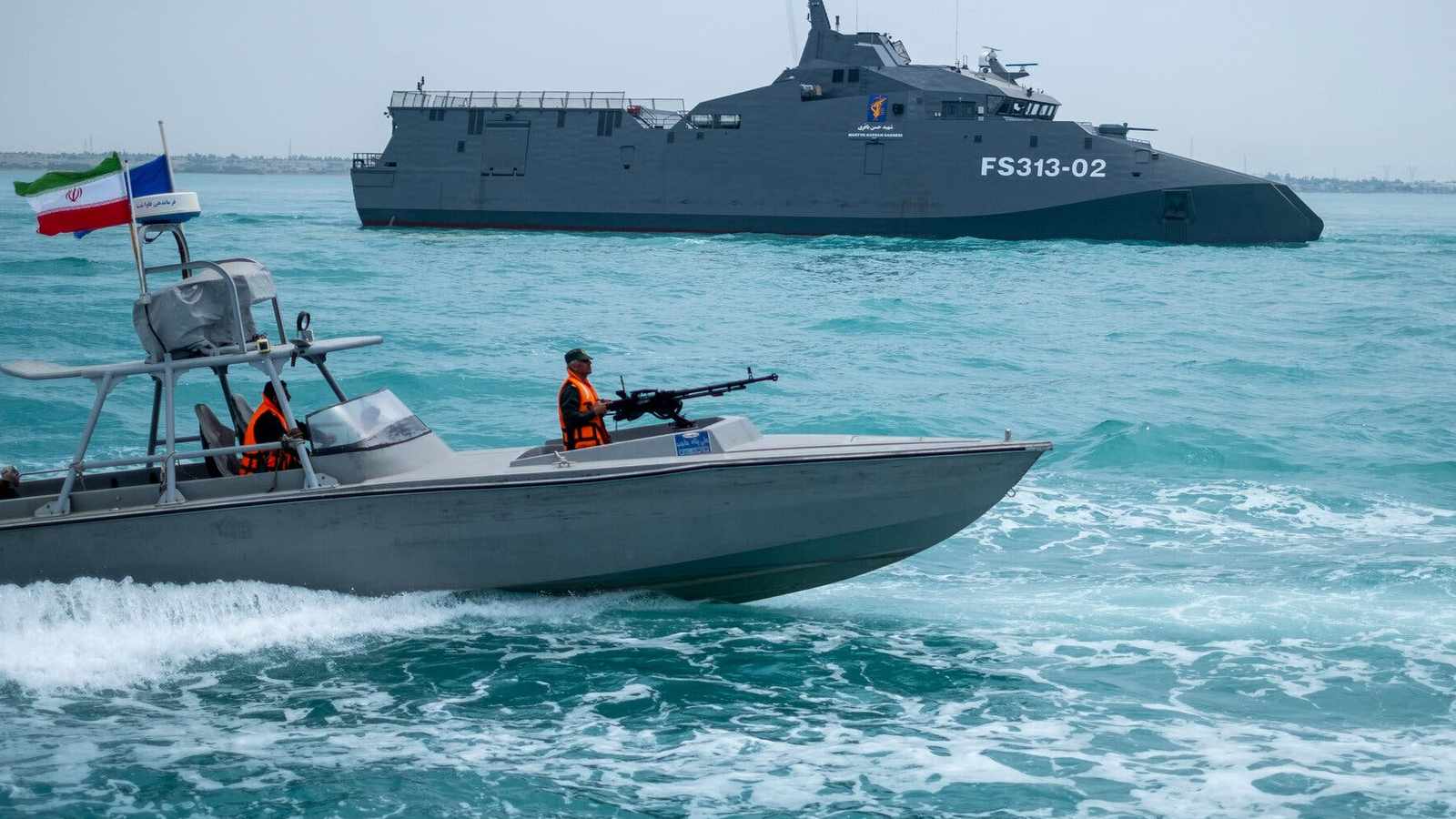
A high-stakes diplomatic effort to restore commercial navigation through the Strait of Hormuz has reached a critical juncture, as U.S. officials report measurable progress in Oman-mediated talks while simultaneously issuing severe military ultimatums to Tehran. Speaking at the State Department on Tuesday, Secretary of State Marco Rubio confirmed that negotiations between Iran and Oman—with direct American participation—have advanced toward a short-term framework to allow merchant vessels safe passage through the vital energy chokepoint.
The diplomatic push coincides with explicit warnings from President Donald Trump, who told Fox News that the waterway would open “very soon” or Iran would face devastating military strikes. However, the diplomatic urgency is unfolding against the backdrop of significant U.S. military logistics constraints. Operational reports confirm that five months of intensive conflict have severely depleted American stockpiles of long-range precision missiles and air defense interceptors, creating a compelling strategic incentive for Washington to secure a negotiated resolution before military capabilities are further strained.
Progress in Muscat and the Dual-Channel Proposal
The core of the technical negotiations in Muscat centers on a pragmatic dual-channel maritime transit protocol designed to bypass ideological stalemates over sovereignty. According to an Iranian source familiar with the direct discussions between Tehran and Muscat, the proposed agreement would split transit control between the two coastal states. Inbound commercial traffic entering the Persian Gulf would navigate through the northern channel closest to Iran, under the operational management and coordination of Iranian maritime authorities. Outbound traffic exiting into the Sea of Oman would utilize the southern channel, managed entirely by Omani authorities.
Under this arrangement, a commercial “service fee” would be levied on transiting vessels, with revenue divided between Iran and Oman. While Secretary Rubio noted that final agreement had not yet been reached, U.S. Treasury Secretary Scott Bessent went further during an appearance on CNBC, suggesting a formal consensus could be finalized within 24 to 48 hours. Regional mediators from Qatar and Pakistan are also actively backing the Muscat track, urging all parties to restore pre-war navigation norms in accordance with international maritime law.
Military Ultimatums Against Depleted Missile Stockpiles
Despite the optimistic tone from diplomatic channels, the negotiation strategy remains deeply entwined with aggressive military posturing. Speaking from Southern California, President Trump asserted that Tehran was operating under an existential deadline, warning of “decapitation” strikes against Iranian leadership and infrastructure if commercial transit is not guaranteed immediately. Treasury Secretary Bessent reinforced this stance by arguing that Iran’s diminished naval, air force, and missile production capacities have forced Tehran to the bargaining table.
However, defense analysts and military intelligence sources point to serious material pressures facing the United States. Operational data indicates that the U.S. military has expended virtually all of its global stockpiles of Army Tactical Missile Systems (ATACMS) and Precision Strike Missiles (PrSM) during Operation Epic Fury. Furthermore, high consumption rates of Patriot and Terminal High Altitude Area Defense (THAAD) interceptors have outpaced domestic defense production capacity. While Chief Pentagon Spokesperson Sean Parnell affirmed that U.S. forces maintain a “deep arsenal of capabilities” to execute presidential directives, the inventory drawdown has introduced tactical vulnerabilities that underline the urgency of the diplomatic track.
Energy Shockwaves, Iraqi Losses, and Market Reactions
The blockade of the Strait of Hormuz—through which approximately 20% of global crude oil normally passes—has inflicted severe economic dislocations across the Middle East while roiling global financial markets. Iraq has emerged as one of the most severely impacted nations. According to data from maritime tracking firm Kpler and statement from Iraqi Oil Ministry officials, Baghdad managed to export only 30 million barrels of crude through the strait over the past month, compared to pre-war averages of 105 million barrels. Iraq’s monthly oil revenues have plummeted from $8 billion to barely $1.5 billion, forcing the OPEC producer to halt operations at major oil fields and reroute limited supplies via pipeline to Turkey and by tanker trucks through Syria.
On global exchanges, news of potential diplomatic progress triggered immediate market shifts. Crude oil prices eased, providing momentum to Wall Street where the S&P 500 rose 1.9% toward record highs and the Dow Jones Industrial Average crossed historic thresholds. Concurrently, major Western energy conglomerates reported surging quarterly earnings driven by energy market volatility; British major BP announced that its second-quarter net profit more than doubled to $3.91 billion, contributing to a combined $47 billion windfall for the top five Western oil majors.
Maritime Warfare and the Fragile Diplomatic Corridor
Even as envoys negotiate in Muscat, kinetic operations in surrounding waters highlight the extreme fragility of the security environment. U.S. Central Command (CENTCOM) reported that American forces have assisted over 1,000 vessels in transiting the southern channel over the past three months, while simultaneously intercepting or redirecting 45 commercial ships linked to Iranian ports under reinstated blockade measures. Meanwhile, peripheral conflict vectors remain active: an Indian mechanized sailing vessel, the MSV Faize Noore Oliya, capsized near Yemeni waters on Tuesday after being hit by an unprovoked projectile, requiring the rescue of 14 crew members by the Yemeni Coast Guard.
In Tehran, Iranian President Masoud Pezeshkian emphasized during a public address that while Iran remains fully committed to defending its national borders and coordinating with its armed forces, it does not seek an expansion of the war. Pezeshkian also dismissed domestic rumors regarding his potential resignation, calling for national unity. As negotiators in Muscat address the final operational details of the transit deal, the coming days will determine whether economic necessity and diplomatic pragmatism can prevail over ongoing regional escalation.