


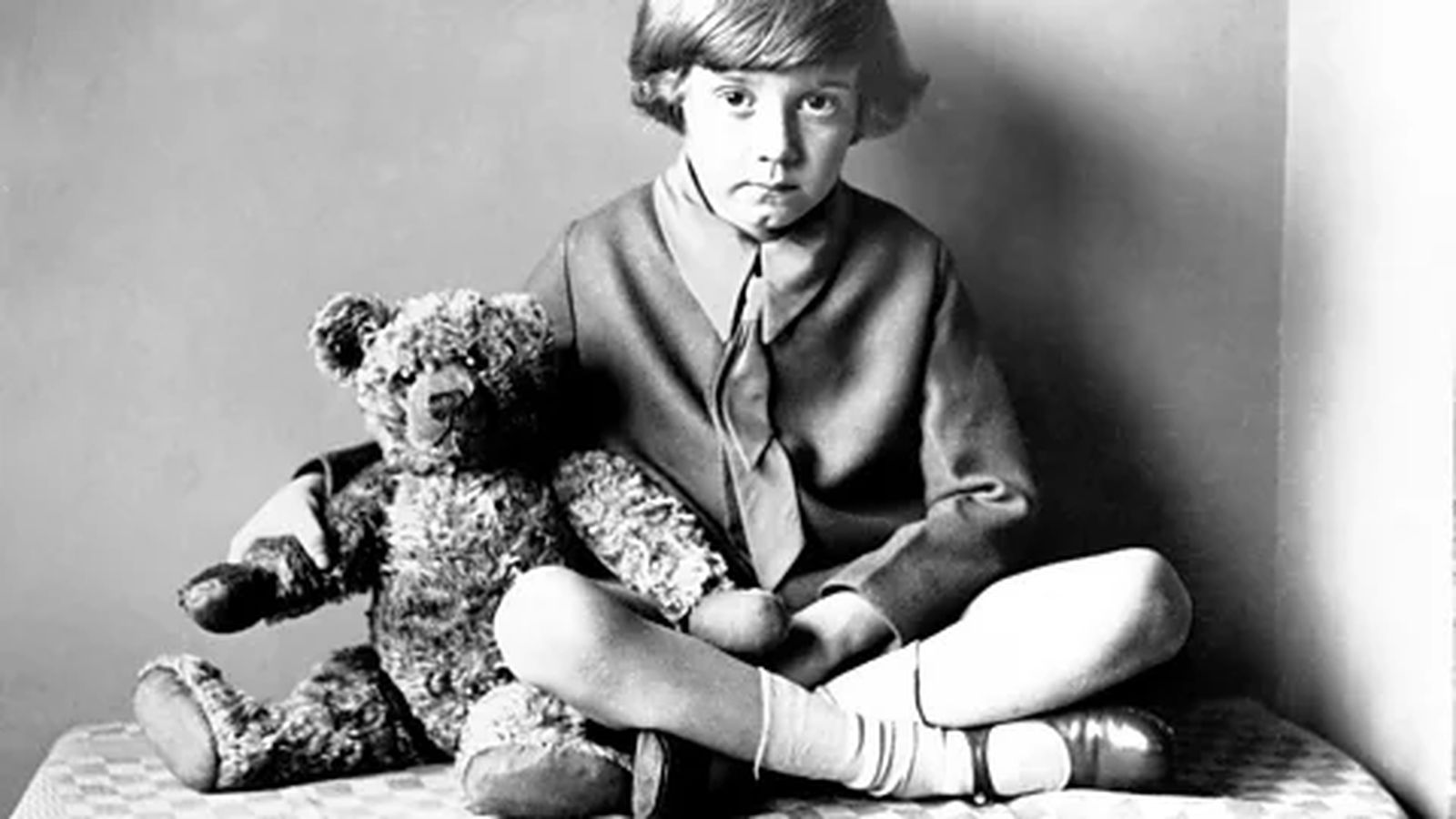
October 2026 marks the centenary of the publication of A.A. Milne’s first Winnie-the-Pooh book, a literary milestone that invites a historical examination of the strained relationship between the author and his son. While the franchise has grown into one of the highest-grossing media empires in history, as BBC reported in October 2026, the real-life inspiration behind Christopher Robin spent decades grappling with what he termed the “empty fame” of being a literary icon. The books, introducing beloved characters modeled on the author’s son and his soft toys, launched a global phenomenon that eventually took on a life far beyond Ashdown Forest in East Sussex, England. Yet the reality of the books’ inception carried a heavy personal toll, marked by nanny-dominated isolation during childhood and a lifelong struggle to escape a fictional shadow.
Childhood Isolation and Remote Parenting
As portrayed in the 2017 film Metro reported, the youthful years of Christopher Robin Milne were far removed from the idyllic, carefree atmosphere depicted in his father’s pages. In archival interviews recorded before his death, Christopher recalled that his upbringing up to the age of 10 was strictly governed by nannies, leaving him with little direct contact with his parents. He noted that A.A. Milne was a fairly remote figure during his early years, observing that his father was not specifically writing for him but rather crafting stories for himself as a creative outlet. This emotional distance later formed the bedrock of Christopher’s complex resentment toward the literary legacy that forever linked his identity to a fictional boy.
The Burden of Fictional Celebrity
Initially, the publication of the stories brought a sense of excitement and pride to the young Christopher, but that thrill faded as he grew older. In his 1974 memoir, The Enchanted Places, he expressed a deep sense of grievance, writing that his father had built his literary success by “climbing upon my infant shoulders” and leaving him with nothing but the burden of public recognition. Crippling shyness during his school years and subsequent struggles to establish an independent adult career intensified his resentment. He frequently sought to avoid public attention, admitting that he would often run away whenever people brought up the subject of Winnie-the-Pooh.
Reconciliation and Legacy
Despite the lifelong friction, Christopher eventually reached a degree of reconciliation regarding his father’s work before his death. Biographer Ann Thwaite observed that he came to understand that A.A. Milne had been devoted to him in his own reserved way, having used writing as a substitute mechanism to express feelings he could not articulate in direct interactions. Although the discomfort of unwanted fame never fully vanished, the centenary of the publication serves as a lasting reminder of the complex human reality behind one of children’s literature’s most enduring creations.
Looking closer at the timeline, the friction between the real-life namesake and the fictional character persisted through major milestones of the younger Milne’s life. Born in 1920, Christopher was initially called Billy, and his early inability to pronounce his surname led to the family nickname Billy Moon. His toys—including the original teddy bear Edward, later renamed Winnie-the-Pooh after a real bear at the London Zoo—became household names across the globe after E.H. Shepard illustrated the texts. While readers across multiple generations embraced the Hundred Acre Wood as a sanctuary of warmth and uncomplicated affection, the domestic reality at Cotchford Farm in Hartfield was far more complicated. A.A. Milne himself was an established playwright and humor writer for publications like Punch before his children’s books eclipsed his entire bibliography, a shift in public recognition that reportedly frustrated the author as well.
As Christopher grew into adulthood, serving in the Second World War and later studying mathematics at Trinity College, Cambridge, the inescapable association with his fictional counterpart followed him into professional and personal spheres. His decision to marry his first cousin, Lesley de Sélincourt, triggered a permanent estrangement from his mother, Daphne Milne, compounding the familial friction. Together, Christopher and Lesley eventually moved to Dartmouth to open the Harbour Bookshop, an endeavor through which he sought a quiet, independent existence away from the commercial machinery of the Pooh empire. Throughout his later years, even as he participated in local preservation efforts for Ashdown Forest and helped fund charities through his daughter Clare’s connection, he maintained a distinct boundary against the endless merchandising and public fascination surrounding his childhood.