


WARSAW (Azat TV) – At least seven passenger flights across Europe received hoax bomb threats on Tuesday, November 3, 2026, causing widespread disruption, emergency diversions, and airport security sweeps in Poland, Spain, Italy, and Bulgaria. Security forces confirmed that no explosive devices were discovered on any of the targeted aircraft.
According to reporting published by CTV News, the coordinated wave of security alerts impacted flights heading toward major European hubs. At least two flights bound for Warsaw, two for Sofia, two for Rome, and one for Murcia airport in Spain were subjected to the threats on Tuesday. A separate flight to Sofia had received a threat a day earlier.
Emergency Responses and Airport Disruptions
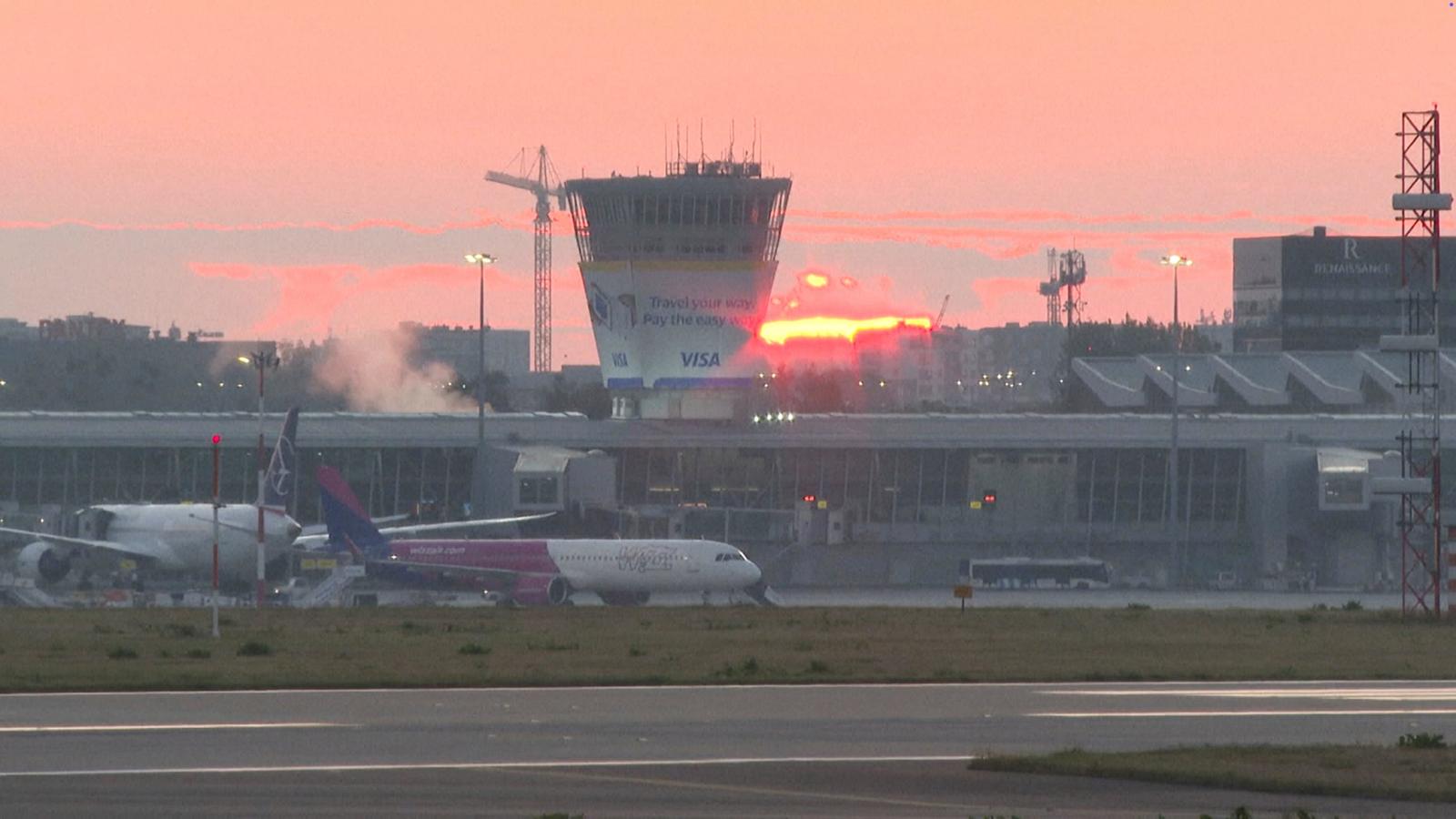
In Poland, authorities diverted a LOT Polish Airlines flight from London that was originally scheduled to land at Warsaw’s Chopin Airport. The aircraft was redirected to nearby Modlin airport, which was temporarily closed and later reopened after security personnel searched the plane and found no suspicious devices. Another Warsaw-bound flight, an SAS service from Copenhagen, landed at Chopin Airport as scheduled. Chopin airport representatives stated that no device was found and that the facility remained operational throughout the incident.
In Bulgaria, the transport ministry reported that two incoming flights—one operated by Wizz Air from Milan/Bergamo carrying 176 passengers, and another operated by Ryanair from Dublin with 186 passengers on board—were targeted. Both flights landed safely and were cleared following thorough inspections. A day earlier, a Wizz Air flight from London to Sofia had been diverted to Budapest after a bomb threat, according to a statement posted on Facebook by Hungarian Defence Minister Romulusz Ruszin-Szendi.
In southeastern Spain, parts of the airport in Murcia were cordoned off on Tuesday following a bomb threat reported on a Ryanair flight arriving from Manchester. Officials confirmed the report was a hoax, allowing the airport to resume standard operations after inspections revealed no explosives.
Meanwhile, in Italy, two Ryanair flights arriving from Lisbon and Dublin were searched at Rome’s Fiumicino airport following alerts. A source from airport operator ADR confirmed that the Dublin flight was escorted by the Italian Air Force until it safely landed. The security alerts were cleared quickly, and Fiumicino continued operating without disrupting other air traffic.
Hybrid Attack Concerns and Security Context
While no official claims of responsibility have been made and national authorities have refrained from assigning direct blame, the Tuesday incidents coincided with broader security anxieties across the continent. European officials have increasingly pointed to low-cost, deniable hybrid operations and sabotage across European infrastructure.
Earlier in the week, unidentified hackers disrupted refrigeration units across supermarkets in several European countries. Security analysts noted that the combination of cyber disruptions and simultaneous aviation hoaxes fits an established pattern of hybrid harassment. Eric Schouten, head of the aviation security group Dyami, told CTV News that such operations “do fit the narrative of Russian state actors who want to disturb Europe,” though Moscow and Tehran have repeatedly denied involvement in any such campaigns.