


What the photograph shows
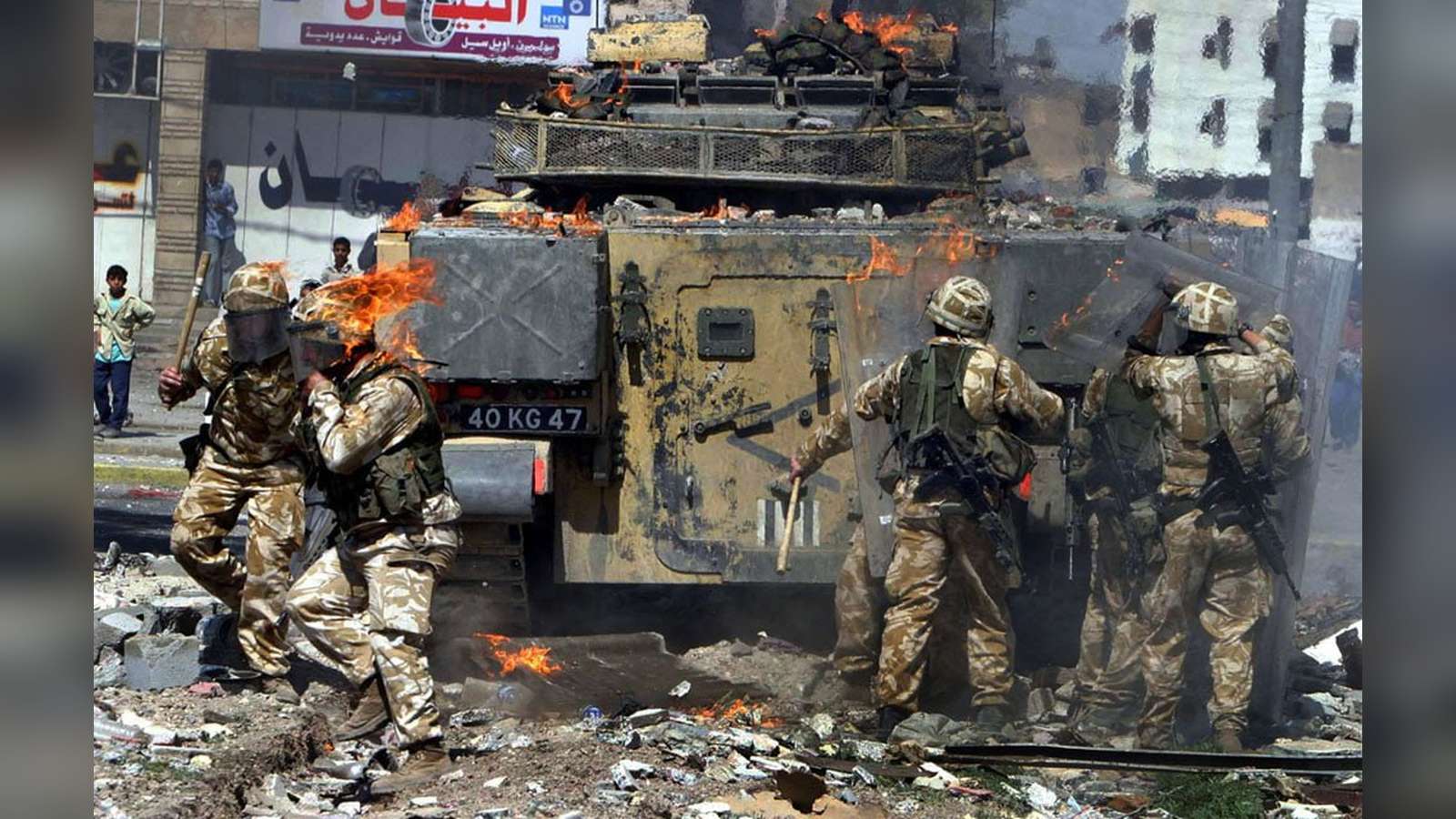
This stark Associated Press photograph captures a harrowing moment of urban warfare during the occupation of Iraq: a British soldier running down a dusty street in the southern city of Basra, his head and shoulders engulfed in sudden fire. Surrounding the chaos are the raw, unfiltered elements of a volatile protest turned riot. Plumes of smoke, scattered debris, and the tense postures of military personnel under siege define the frame. The image strips away political abstractions, reducing the international intervention to a raw human confrontation between desperate local populations and heavily armed foreign troops.
Visual analysis of the frame reveals the asymmetric nature of the urban engagement. The soldier, laden with heavy combat gear and protective equipment, is caught in a moment of acute vulnerability, propelled forward by survival instinct as incendiary material blazes from his upper body. The background is marked by the harsh, unrelenting glare of a southern Iraqi afternoon, throwing deep shadows and casting an ominous haze over the streetscape. Debris litters the pavement, bearing silent witness to the volley of rocks, petrol bombs, and improvised projectiles that preceded this split-second escape. Other troops are obscured by smoke or positioned out of frame, emphasizing the sudden isolation of the individual soldier when crowd control measures violently collapse.
The moment behind the image
The photograph was taken on March 22, 2004, against the backdrop of mounting economic despair and simmering resentment in southern Iraq. Approximately 500 unemployed Iraqi civilians had gathered to protest a broken promise of jobs within the local customs police force. What began as a grievance over livelihood rapidly deteriorated into open violence. According to local officials, including Basra customs chief Col. Zafer Abdel-Nabi, the crowd began hurling rocks, petrol bombs, and even a grenade at the British patrol. Fourteen British troops were wounded in the ensuing explosions and skirmishes, three of them seriously enough to require emergency evacuation to the military hospital at Shaibah, while six Iraqi civilians sustained injuries during the deployment of tear gas.
In the minutes leading up to the shutter click, tension had steadily escalated as demonstrators chanted slogans condemning the coalition authorities and expressing outrage over concurrent regional tragedies. The failure of the occupying administration to deliver on widespread promises of economic revival, infrastructure repair, and immediate employment had transformed public sentiment from cautious anticipation to bitter hostility. When British forces deployed tear gas to disperse the gathering crowd, the demonstration fractured into running street battles. The petrol bomb that found its mark on the soldier’s protective vest was part of a coordinated barrage launched from alleyways and surrounding rooftops, demonstrating the dangerous limitations of mechanized patrols in densely populated urban environments where local intelligence and security guarantees were virtually nonexistent.
Photographer and provenance
Distributed globally by the Associated Press wire service, images from this series captured the sudden rupture of order that daily confronted coalition patrols in southern Iraq. While military censors and public relations offices sought to project an image of stabilization and reconstruction, press photographers operating on the ground documented the grinding reality of urban resistance. Working under extreme security risks, photojournalists captured the split-second reactions of soldiers navigating hostile crowds, providing a visual record that bypassed official communiqués and directly informed international news outlets.
The provenance of this specific image is rooted in the dangerous daily operations of wire service photographers stationed in southern Iraq during the turbulent spring of 2004. Because the British military sector in Basra was largely separate from the American command in Baghdad, media coverage relied heavily on local stringers and dedicated international photojournalists embedded with or operating independently near British patrols. These professionals faced severe hazards, including snipers, kidnappings, and violent crowd reactions. The photograph’s rapid transmission via satellite to news desks around the world ensured that it appeared on front pages globally, shaping editorial discussions about the escalating insurgency and the deteriorating security situation in areas previously deemed relatively calm by military planners.
Historical context
The March 22 clashes in Basra did not occur in a vacuum; they coincided with a wave of acute crisis across Iraq one year after the U.S.-led invasion. The atmosphere was supercharged by concurrent regional events, including the targeted Israeli assassination of Hamas founder Ahmed Yassin in Gaza City, prompting demonstrators in Basra to voice solidarity chants such as “Estamos all sons of Yassin,” alongside traditional grievances against the occupation. Economically, the failure to restore basic services, employment, and infrastructure had turned initial cautious relief among many Iraqis into bitter disillusionment, creating fertile ground for insurgency and civil unrest.
By the spring of 2004, the initial euphoria surrounding the ouster of Saddam Hussein had given way to a complex and bloody insurgency across multiple fronts. In Basra, the British military command attempted to balance counter-insurgency operations with civil policing duties, a mandate for which they were often underequipped and undermanned. The grievances of the unemployed customs applicants reflected a broader national crisis: hundreds of thousands of demobilized soldiers and jobless young men had been cast adrift by the dissolution of the Iraqi state apparatus without adequate reintegration programs. This structural unemployment fueled a volatile undercurrent that extremist groups and local militias eagerly exploited, turning routine demonstrations into explosive flashpoints.
Why it still matters
Two decades later, this photograph stands as an enduring historical artifact of the unintended consequences and human costs of asymmetric warfare. It preserves the exact moment when the promise of post-conflict transition collided with the stark economic realities on the ground in Basra. By freezing the violence into a single, terrifying frame, the image challenges viewers to look past geopolitical strategies and confront the chaotic, flammable reality experienced by soldiers and civilians alike.
The visual legacy of the photograph extends far beyond its initial publication in March 2004. It serves as a stark reminder of the limits of military power in resolving deep-seated socioeconomic grievances. In retrospective analyses of the Iraq War, images like this one are frequently cited by historians and political scientists to illustrate the friction between occupying forces and occupied populations. By capturing the raw terror and physical vulnerability of a soldier engulfed in flames, the photograph strips away the sanitized rhetoric of military briefings, preserving an unfiltered truth about the human cost of intervention that continues to resonate in contemporary discussions of modern warfare and its aftermath.