


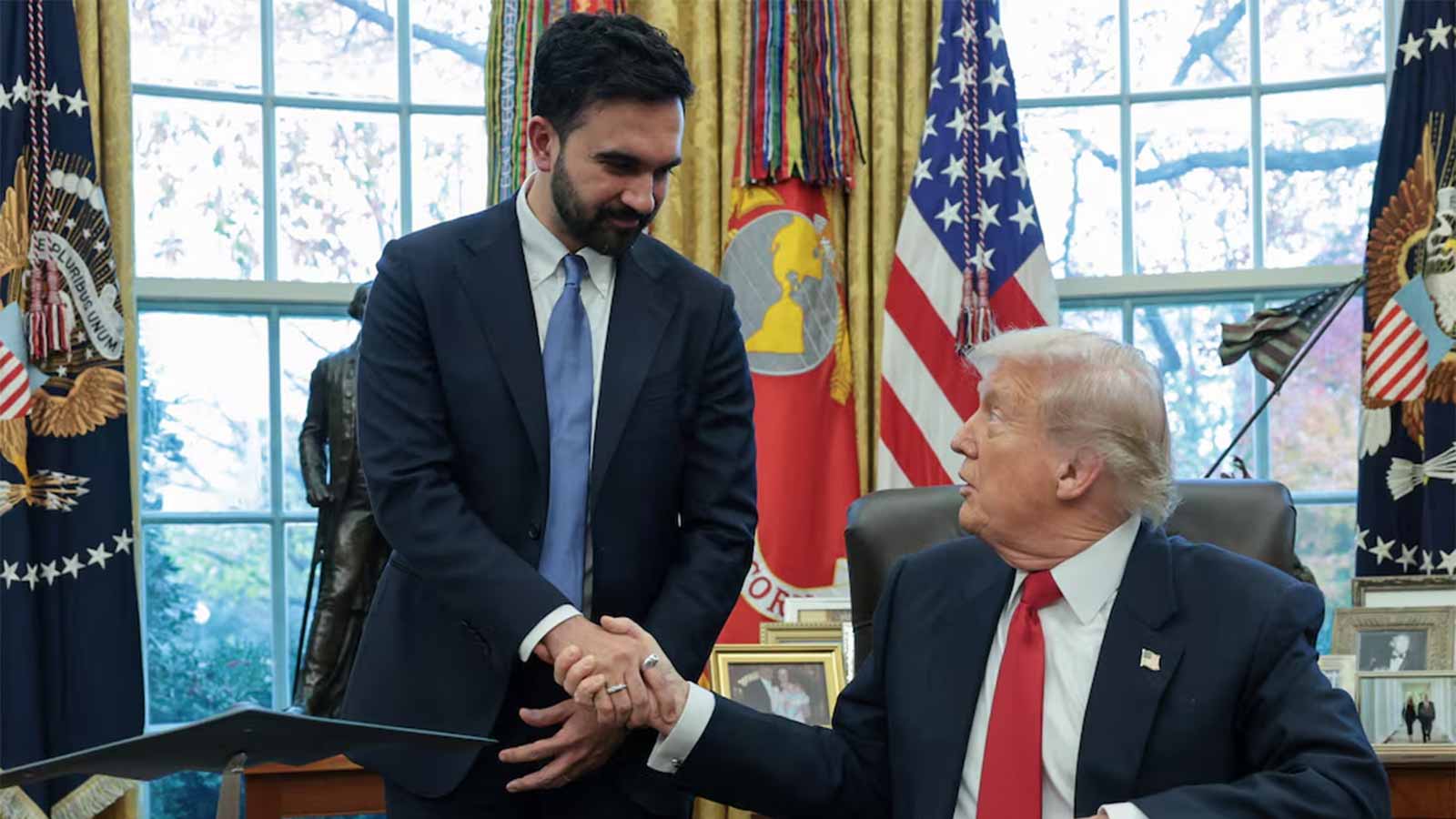
Trump and Mamdani Face Off in the Oval Office: A Historic First Meeting
On November 21, 2025, President Donald Trump and New York City’s mayor-elect Zohran Mamdani met at the White House in what both sides described as a “productive” encounter. After months of public clashes, threats, and ideological sparring, the two politicians—each a symbol of their city’s and party’s divisions—sat down to talk about what matters most to millions of New Yorkers: making life more affordable.
As reporters waited outside the West Wing, the mood inside was unexpectedly civil. The president, once a fierce critic of Mamdani during his campaign, told assembled journalists, “The better he does, the happier I am.” Mamdani, for his part, emphasized his “admiration and love” for New York and said he was “looking forward to delivering for New Yorkers in partnership with the president.”
From Hostility to Partnership? What Sparked the Meeting
This meeting wasn’t always a sure thing. Trump, who built his career in New York, had repeatedly derided Mamdani—a democratic socialist—as a “communist lunatic.” During the campaign, Trump even threatened to arrest and deport the mayor-elect, while Mamdani accused the president of authoritarianism and vowed to “Trump-proof” the city.
But politics is often about pragmatism. With $10 billion in federal funds hanging in the balance—money Mamdani needs to pursue his ambitious affordability agenda—the stakes were high. As J.C. Polanco, a political analyst, noted, “New York City took a big leap of faith with Mayor-elect Mamdani. Now he’s about to assume the important role of chief negotiator in the federal government.”
Members of the media didn’t catch Mamdani’s arrival, but White House officials confirmed he was inside. Communications Director Steven Cheung posted a cheeky photo captioned, “Too late guys! Y’all are too slow!”
What Was Discussed: Affordability, Federal Funds, and Security
According to both NBC News and CBS News, the conversation focused on the affordability crisis: rent, groceries, utilities, and the ways New Yorkers are being “pushed out.” Mamdani described the meeting as “productive,” highlighting the shared goal of making life better in the city. “We spoke about the different ways in which people are being pushed out, and I appreciated the time with the president,” he said.
The mayor-elect’s agenda requires not only federal dollars but also security clearance, vital for briefings on terror threats and law enforcement activities. Trump’s support—or lack of it—could speed up or stall those approvals.
Infrastructure was another key topic. Earlier this fall, the White House froze $18 billion in funding for projects like the Gateway Tunnel and Second Avenue Subway. While Trump later claimed the Gateway project was “terminated,” the ultimate fate of the funding remains unclear.
Political Theater or Genuine Cooperation?
Despite the cordial tone in the Oval Office, the backdrop was anything but friendly. Just hours before the meeting, the House passed a resolution “denouncing the horrors of socialism,” with Speaker Mike Johnson calling it “a happy coincidence” that the vote coincided with Mamdani’s White House visit. Johnson referred to Mamdani as the “Marxist mayor,” underscoring the deep ideological divide.
Trump, speaking to Fox News Radio earlier in the day, said, “He’s got a different philosophy, he’s a little bit different. But I think we’ll get along fine. Look, we’re looking for the same thing—we want to make New York strong.” Mamdani, meanwhile, said he would “work with anyone to make life more affordable for the more than 8.5 million people who call this city home.”
Both had prepared for the encounter by consulting with local political heavyweights. Mamdani spoke with Senate Minority Leader Chuck Schumer and Governor Kathy Hochul before the meeting. Schumer, who didn’t endorse Mamdani but has worked with him in the past, reportedly offered advice on negotiating with the White House.
What’s at Stake: Money, Immigration, and the Future of New York
The outcome of this meeting could shape the future of New York City. Beyond infrastructure funding, federal policy changes loom large: immigration enforcement is set to ramp up, with the administration planning “increased enforcement presence in New York City again because they’re a sanctuary city.” Mamdani has promised to defend sanctuary laws and the rights of all New Yorkers, a commitment that could put him at odds with the administration.
Perhaps most importantly, the session tested whether two men—whose public personas have long clashed—can set aside political theater for practical governance. As analyst Polanco put it, “It depends which Mayor-elect Mamdani and which President Trump show up.” The stakes are more than personal: billions in funding, public safety, and the city’s ability to tackle its affordability crisis all hang in the balance.
As the news cycle churned, both sides seemed eager to highlight their willingness to cooperate. Mamdani called the meeting an “opportunity to make the case for New Yorkers,” while Trump predicted Mamdani would “surprise some conservative people.” The president even admitted, “Some of my views have changed,” suggesting a potential openness to compromise.
Still, the undercurrent of rivalry remains. Trump has referred to Mamdani as “my little communist mayor,” while Mamdani has promised to “Trump-proof” the city. The rhetoric may be cooling, but the fundamental differences persist.
Can New York’s New Mayor Deliver?
The question now is whether Mamdani can leverage this meeting to secure the federal support he needs. With $10 billion in funding, security clearances, and the threat of increased immigration enforcement all in play, the city’s future may depend on how well its new mayor can navigate the treacherous waters of federal politics.
The meeting itself offered a glimpse of hope. Both men expressed admiration for the city and each other’s willingness to talk. But real progress will require more than photo ops and press statements—it will depend on sustained cooperation, tough negotiations, and, perhaps, a willingness to rethink old rivalries.
Assessment: The Trump-Mamdani meeting marks a significant moment in New York’s political landscape, where pragmatism briefly overtook partisanship. While the rhetoric remains heated and the ideological divide deep, both leaders appeared willing—at least for one afternoon—to put the city’s needs above their own. Whether this spirit can endure and translate into real policy change is the challenge that lies ahead.