


Strategic Escalation and Energy Infrastructure
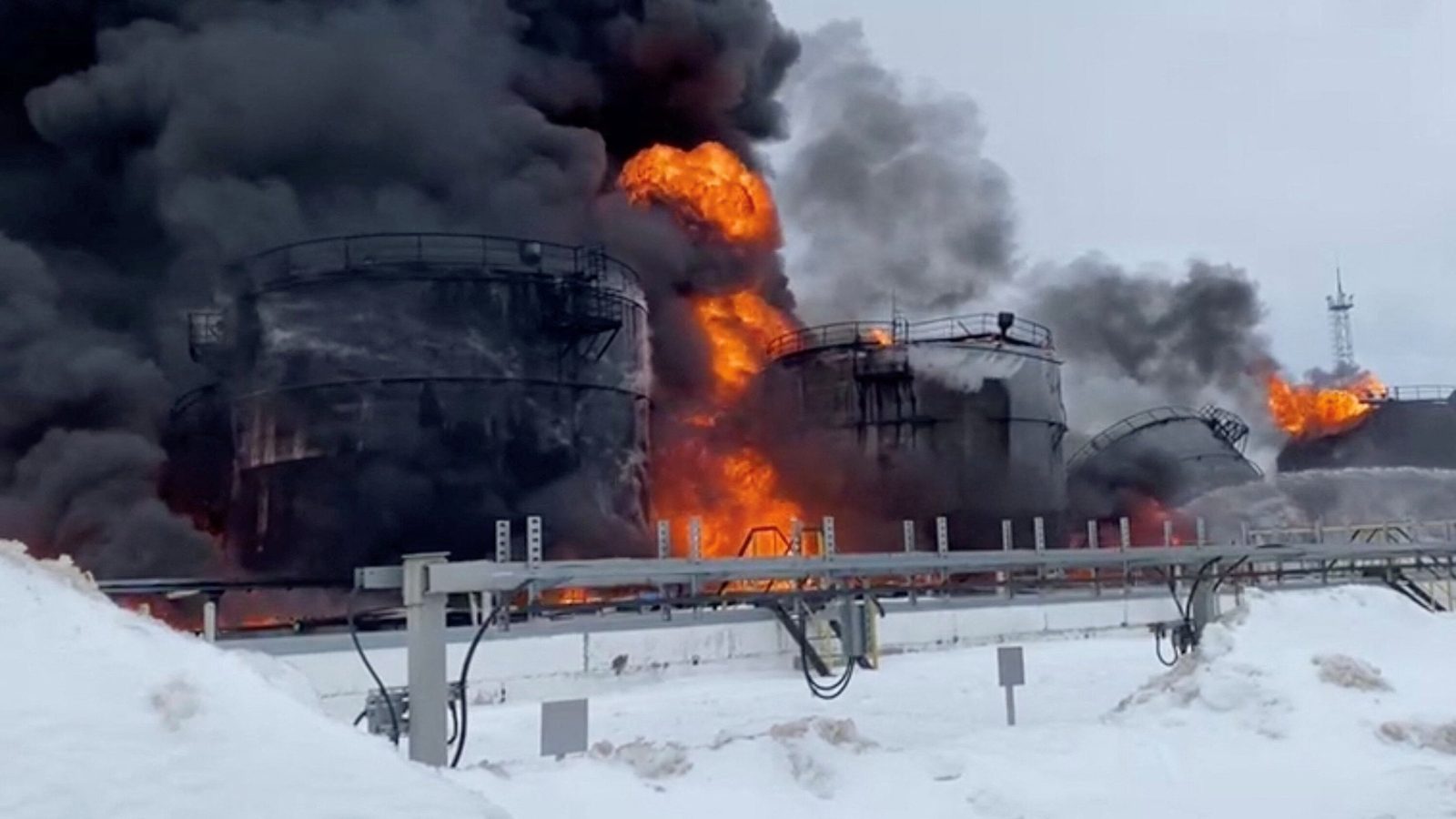
Ukrainian military forces have executed a coordinated series of long-range strikes targeting critical Russian energy infrastructure, specifically hitting the Ilsky and Afipsky oil refineries situated in the Krasnodar region. According to reports confirmed by the Associated Press, the tactical operations successfully struck storage tanks at the Ilsky site and a key processing unit at the Afipsky facility. These refineries maintain significant strategic importance for the Russian war effort, boasting a combined annual processing capacity of approximately 95 million barrels of oil. By targeting these assets, Ukraine aims to disrupt the essential fuel supply chain that sustains Russian military operations across the front lines in eastern and southern Ukraine.
These strikes, which reportedly followed an initial engagement on the night of November 15, 2026, underscore a deliberate and sustained campaign by Kyiv to degrade Russia’s domestic oil sector. This industry serves as a foundational pillar of the Russian economy, providing the necessary capital and fuel to continue the ongoing invasion. While Russian officials acknowledged that industrial facilities within the Krasnodar region were targeted, they refrained from providing detailed assessments regarding the extent of the structural or operational damage sustained by these sites.
Advancing Domestic Military Capabilities
President Volodymyr Zelenskyy has utilized the success of these refinery strikes, alongside a large-scale, multi-stage attack on the Kerch Bridge on November 16, 2026, to showcase the rapid advancement of Ukraine’s defense industrial base. The operation against the bridge—a vital logistical artery connecting Russia to the illegally annexed Crimean Peninsula—involved a sophisticated deployment of long-range drones and missiles developed by Ukrainian firms. These assets were the result of weeks of meticulous preparation. Satellite imagery captured on November 16 revealed initial impact points, which were subsequently compounded by a second strike that caused more extensive structural damage to the bridge’s integrity.
“Our technologies and companies are developing very well,” President Zelenskyy stated in a public post. He noted that Ukraine is currently ranked among the top three nations globally for technology development, asserting, “In Europe, I think we’re number one.” This focus on domestic production is intended to enhance strategic autonomy, allowing Ukraine to conduct high-precision operations deep within Russian territory without relying exclusively on foreign-supplied platforms. By demonstrating these capabilities, the Ukrainian government is signaling to its international partners that it possesses the internal capacity to alter the tactical landscape of the five-year war through indigenous innovation.
The Growing Human and Diplomatic Toll
The intensification of these strikes occurs against a backdrop of escalating violence and complex diplomatic maneuvering. As both sides await a new round of U.S.-mediated talks, the situation on the ground remains dire. The United Nations Human Rights Monitoring Mission in Ukraine reported that civilian casualties reached alarming levels last month, with 372 deaths and 1,981 injuries—a figure 95% higher than in October 2025. Danielle Bell, head of the U.N. agency in Kyiv, highlighted that the first ten months of 2026 have already seen more civilian deaths than the entirety of 2025.
Russian military actions continue to target energy facilities and civilian infrastructure, with recent strikes impacting Odesa and the Kharkiv region. In response, Kyiv maintains that its deep-strike strategy is a necessary measure to disrupt the Russian war machine. While the Pentagon has previously expressed concerns that such strikes deep inside Russia could be counterproductive, Ukraine’s European allies have consistently defended the nation’s right to target the sources of the ongoing bombardment.
Negotiation Leverage and Future Outlook
The current diplomatic climate is heavily influenced by upcoming high-level discussions. U.S. President Donald Trump has signaled plans to consult with Chinese President Xi Jinping and Russian President Vladimir Putin during a scheduled visit to China. These sessions are viewed as a critical juncture for all involved parties to establish leverage before any potential negotiation framework is solidified. For Kyiv, the strategic application of domestically produced weaponry serves a dual purpose: it directly erodes Russian logistical and economic stability while simultaneously strengthening Ukraine’s leverage at the negotiating table.
As the conflict approaches the conclusion of its fifth year, the sustainability of Ukraine’s defensive and offensive doctrine has become increasingly tied to its ability to maintain pressure on Russian infrastructure through local innovation. The effectiveness of these locally produced systems remains a subject of intense analysis by global military observers. The success or failure of these specific strikes will likely play a decisive role in shaping the scope, scale, and nature of future military aid and the diplomatic pressure applied to both Moscow and Kyiv as the international community seeks a path toward de-escalation.