


Resource Claims and Strategic Rhetoric
President Donald Trump announced on Tuesday that “massive” oil, gas, and mineral exploration is preparing to begin in Greenland. In a statement posted to his Truth Social platform, the President characterized the semi-autonomous territory as “our new and beautiful Greenland,” asserting that experts suggest the island holds easily accessible oil reserves superior to most other regions globally. This declaration marks a significant shift in public rhetoric, pivoting from the strictly defense-oriented language utilized during the recent diplomatic negotiations that formalized deeper U.S. involvement in the region. The President’s comments underscored Greenland’s role as a critical defensive buffer for both the United States and Europe. According to CBS News, Trump framed the island as a strategic sentinel, stating that any future offensive against the U.S. would necessarily cross through Greenlandic territory. He emphasized that the U.S. military presence on the island allows for the routine interception of drones, missiles, and other advanced threats, providing the U.S. with unparalleled “time, location, and sightline.”
The September Trilateral Agreement
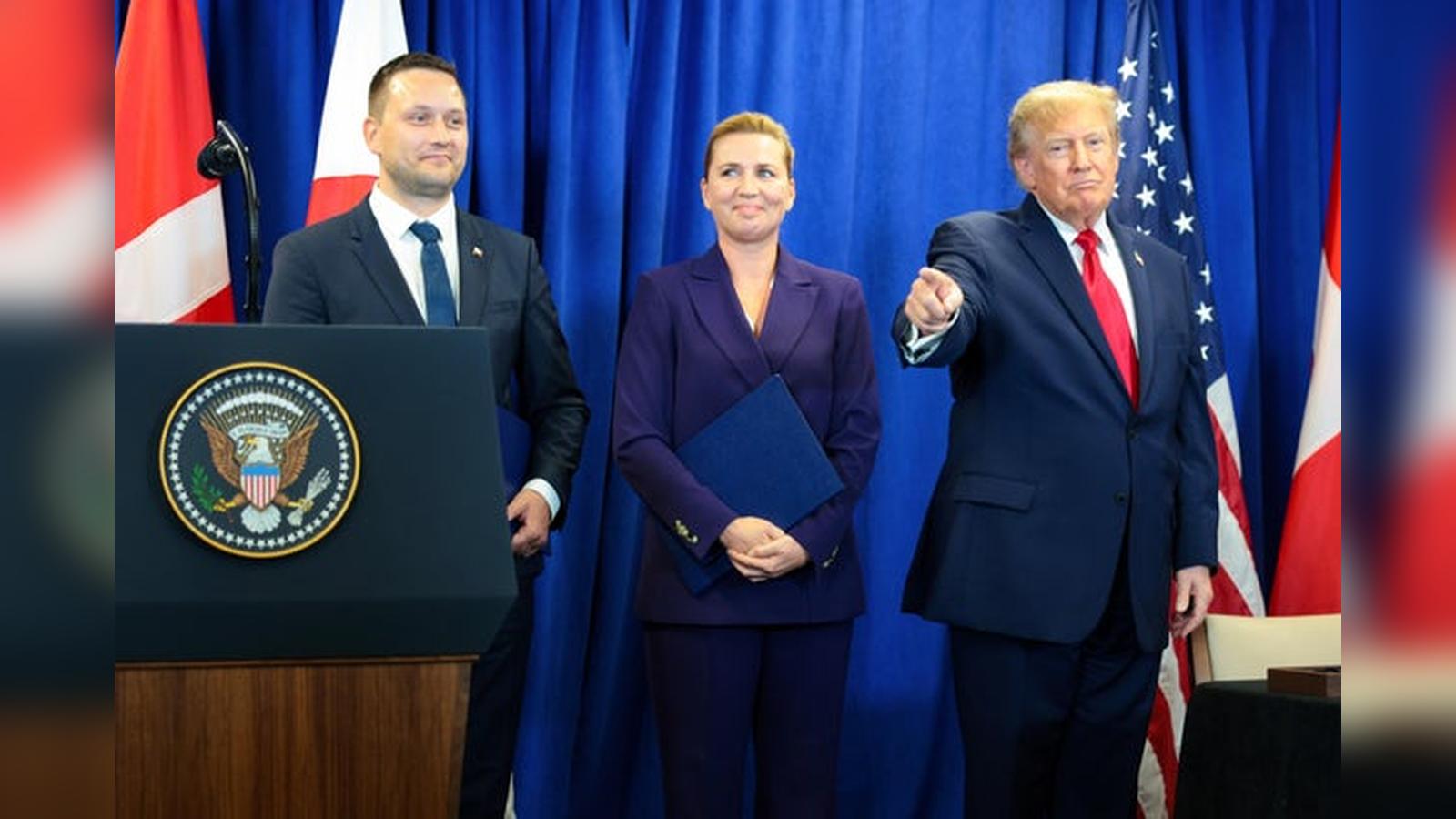
This development follows a formal trilateral security and defense agreement signed in September 2026 by the United States, Denmark, and Greenland on the sidelines of the United Nations General Assembly. That pact, described by Devdiscourse as a milestone in Arctic cooperation, solidified the U.S. military footprint in the North Atlantic. The agreement grants the United States extensive access to the island’s airspace and territory, specifically authorizing the expansion of the Pituffik Space Base—a critical early-warning installation—and the establishment of new military sites at Narsarsuaq and Mestersvig. While the September deal explicitly addresses military and security infrastructure, it also contains references to “minerals cooperation” between the three parties. However, the document remains vague regarding the scope and timeline of any commercial extraction. The agreement also includes provisions that effectively prevent non-NATO nations from establishing military bases on the island without the express consent of the U.S., Denmark, and Greenland. The pact, which reportedly has no expiration date, effectively grants the U.S. permanent security oversight, a claim that aligns with the President’s vision of an “Infinite Life” agreement that addresses all U.S. security concerns in the region.
Regulatory and Economic Realities
The President’s call for imminent large-scale extraction encounters a complex regulatory landscape. Greenland suspended the issuance of new oil and gas exploration licenses in 2021, citing environmental and climate change concerns. While the trilateral pact reaffirms Danish sovereignty and Greenlandic self-determination, the administrative path for authorizing massive fossil fuel projects remains subject to local legislative hurdles that have thus far prioritized environmental stability over extractive industry growth. Furthermore, industry analysts have long noted that the high costs associated with Arctic extraction often render such projects economically unviable for private enterprises without significant state backing or shifts in global energy markets. The tension between the President’s assertive rhetoric and the existing legal frameworks suggests a coming period of diplomatic testing. As the U.S. seeks to cement its Arctic security posture, the integration of resource extraction into the trilateral relationship introduces new variables that may complicate the delicate balance between Danish oversight and Greenland’s local governance. The administration has yet to provide a roadmap for how it intends to reconcile these plans with the current Greenlandic moratorium on drilling.
Strategic Implications of the Arctic Pivot
The transition from diplomatic security negotiations to overt resource-based rhetoric marks a departure from standard Arctic policy, which historically emphasizes international cooperation and environmental stewardship. By designating Greenland as a territory for “massive” exploration, the administration is signaling a shift toward treating the island as a vital component of the American national energy portfolio. This move is particularly significant given the island’s history of being viewed through a purely defensive lens. The potential for friction between Washington, Copenhagen, and Nuuk is high, as any push for large-scale drilling would require a reversal of Greenland’s established environmental policies. Observers note that while the U.S. has secured the right to expand its military footprint—including the ability to propose new “defense areas” subject to approval—the actual implementation of resource extraction remains a distinct legal and economic challenge. The complexity of the Arctic environment, combined with the logistical hurdles of operating in such a remote region, suggests that the President’s vision for immediate exploration may face significant reality-based delays. Furthermore, the reliance on “expert” projections regarding oil availability remains a point of contention among independent geologists who have historically cautioned that the costs of extraction in the Arctic often outweigh potential returns, particularly when factoring in the required infrastructure for transport and processing. As the U.S. continues to fortify its Arctic presence, the question remains whether the promise of economic gain will facilitate a smoother integration of U.S. interests or if it will create new administrative roadblocks that could impede the very security cooperation the trilateral agreement was designed to foster.
The Path Forward
As the administration moves to solidify its influence, the specific terms of the September agreement will be tested. The ability of the U.S. to make sensitive investments, as hinted at in the President’s rhetoric, must be navigated within the framework of Danish sovereignty and Greenlandic autonomy. With the Pituffik Space Base serving as the cornerstone of this new security reality, the U.S. is clearly signaling that it views the Arctic as the next frontier of global competition. However, the intersection of military strategy and commercial ambition is rarely straightforward, especially when local governance and environmental mandates remain firmly in place. The diplomatic community will be watching closely to see how the U.S. manages the delicate task of balancing its desire for resource access with the need to maintain the trust of its Danish and Greenlandic partners. Whether the “massive” exploration plans materialize into tangible projects or remain a rhetorical placeholder will depend heavily on the willingness of local authorities to revisit their moratoriums and the ability of the U.S. to provide the necessary economic incentives to overcome the inherent challenges of Arctic development.
Reporting source: cbsnews.com.