


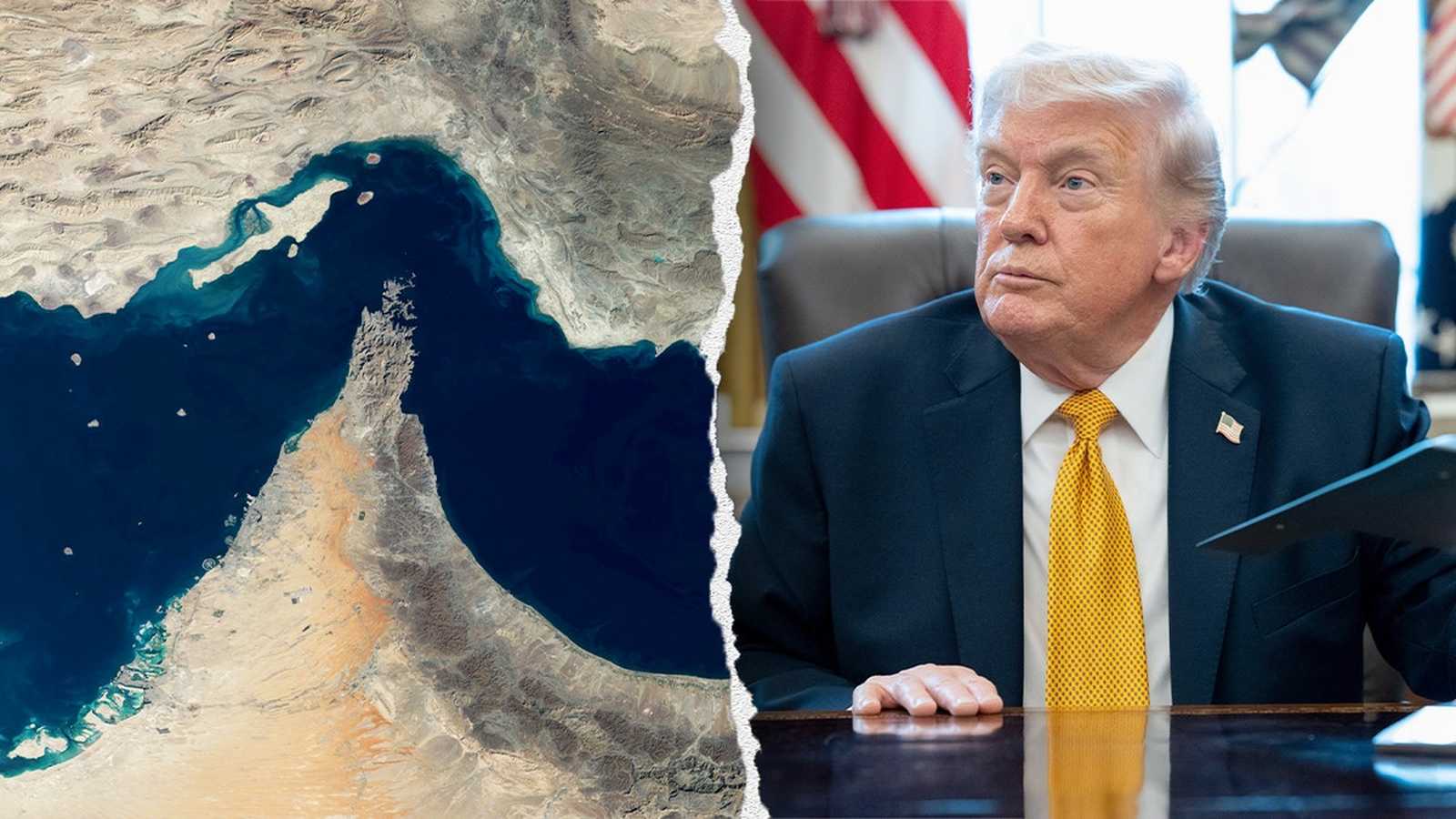
WASHINGTON — The Trump administration has unveiled an aggressive sanctions package aimed at severing Iran’s global financial conduits, marking a significant escalation in Washington’s strategy to constrain Tehran following months of conflict. US Treasury Secretary Scott Bessent announced during a news conference on Monday that the United States is initiating an economic campaign targeting 60 entities, individuals, and vessels across key commercial sectors, while issuing explicit warnings to third-party nations and foreign commercial institutions against maintaining business relations with the Iranian government.
The Treasury Department’s actions target five designated economic sectors: digital assets, technology, gold, aviation, and shipping. According to Bessent, the measures are designed to dismantle gray-market trade corridors and isolate Tehran from the international financial framework. As part of this expanded enforcement posture, the Treasury Secretary confirmed that non-compliant institutions face immediate exclusion from the US dollar clearing system, announcing that a major foreign financial institution will be formally designated and sanctioned by the end of the week.
The Architecture of Washington’s Economic Blockade
The updated US measures build upon an intensified posture initiated after direct military clashes between the US, Israel, and Iran broke out on February 28. Although an April 8 ceasefire suspended nearly forty days of large-scale aerial bombardments, administrative officials have pivoted from direct force to comprehensive financial restriction. Bessent asserted that previous military operations had already disrupted significant portions of Iran’s industrial defense infrastructure, setting the stage for what he characterized as systemic economic asphyxiation.
Under the newly enacted measures, the US Department of the Treasury has expanded secondary sanction mechanisms to penalize non-US entities operating within gray-market spaces. Addressing potential non-compliance by foreign commercial banking networks—specifically targeting financial institutions in China—Bessent emphasized that no international body remains beyond the reach of US enforcement. Washington has called upon global allies to adopt identical regulatory restrictions, arguing that continued economic interaction directly facilitates Iranian regional military activities.
Tehran’s Strategic Defiance and Alternative Trade Networks
In response to Washington’s announcement, Iranian leadership rejected the premise of the sanctions, framing the administration’s strategy as an admission of strategic weakness. Mohammad Bagher Ghalibaf, Speaker of the Iranian Parliament and head of Tehran’s diplomatic delegation, publicly asserted on social media that the United States lacks the global economic leverage required to dictate the trade parameters of third countries. Ghalibaf stated that key international trade partners have communicated directly to Tehran that they will not alter existing commercial agreements based on US directives.
Concurrently, Iran’s Foreign Ministry characterized the sanction rollout as a continuation of maximum pressure tactics that would fail to alter Tehran’s national policy. Despite the immediate devaluation of the Iranian rial to historic lows against major foreign currencies on foreign exchange markets, Iranian security officials maintained that the domestic economy possesses sufficient structural insulation to endure prolonged sanctions pressure.
Speaking to Al Jazeera, Mostafa Khoshcheschm, a professor at Tehran’s University of Applied Science and Technology, noted that Iran has constructed operational trade corridors to bypass Western monitoring mechanisms over the past decade. Khoshcheschm reported that Iran continues to export over one million barrels of crude oil daily outside the US maritime blockade. He detailed that Tehran has developed land and transit corridors linking northern and eastern neighboring states—including five dedicated transport routes through bordering nations—enabling sustained trade flows with Russia, China, and regional partners.
The Hormuz Flashpoint and Regional Security Stakes
The economic escalation directly intersects with growing maritime friction in the Strait of Hormuz, which has re-emerged as the primary operational flashpoint of the conflict. The Iranian Assembly is currently advancing draft legislation establishing mandatory service fees and compliance protocols for foreign vessels transiting the strait. Under the proposed framework, ships operating without authorization or violating Tehran’s transit rules face administrative fines, physical detention, or asset confiscation.
Iranian security chief Mohsen Rezaei issued a formal warning that any continuation of Washington’s economic restrictions would prompt Tehran to forcibly halt all oil exports originating from the Persian Gulf. Rezaei declared that any foreign state complying with US sanctions enforcement will be treated by Iran as an active participant in the conflict, designating their assets as legitimate targets.
As regional tensions escalate, diplomatic interventions are underway to prevent direct maritime confrontation. Oman’s Foreign Minister, Sayyid Badr al-Busaidi, is scheduled to travel to Tehran to hold emergency negotiations with Iranian leadership regarding navigation rules in the Strait of Hormuz. The diplomatic initiative highlights acute international concern over potential supply chain disruptions affecting global energy markets should maritime traffic through the strait be curtailed.